Frankincense is harvested by wounding the bark of trees and collecting the resin that is subsequently released from the wound, a process known as tapping. Tapping is carried out at several spots along the stem, using a traditional type of tool that resembles a chisel. The procedure is repeated on 8-12 tapping rounds during the dry season, which lasts about 8 months. But high demand means that many trees are being over-exploited and populations are at risk of dying out, threatening the livelihoods of villagers who depend on them.
 The current annual world production of frankincense is about 200,000 tons. More than 90% of the product comes from Somaliland/Somalia, with some frankincense also gathered in adjacent Southern Arabia.
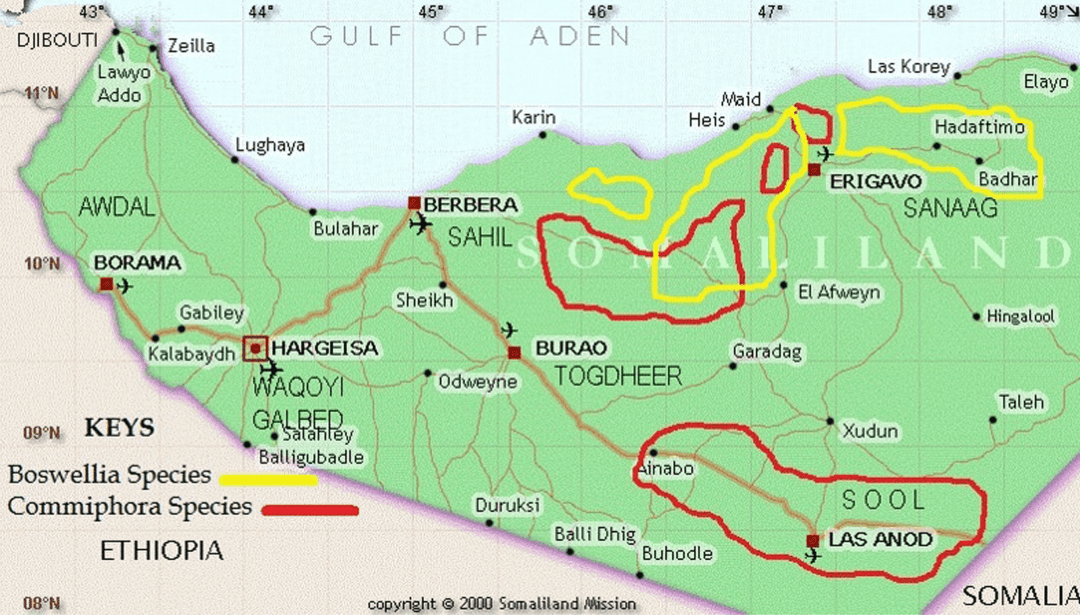
In Somalia, frankincense is harvested in three ecological zones, the northern Cal Madow mountain range, a westerly escarpment that runs parallel to the coast and grows frankincense bearing species; Cal Miskeed, a middle segment of the frankincense-growing escarpment; and Cal Bari or eastern escarpment, which lies at the eastern fringe of the frankinscense escarpment. Frankincense is also produeced in the Karkaar mountains and the mountains lying at the northwest of Erigavo and eil-afweyn zones.
 Beeyo Cooperative